Quality that compounds as you scale
Trusted across industries


Software ships at agent speed
Verification has not kept up
The constraint moved
The old model breaks
Tooling will not close it
Agents write the code. The check has to be independent.
The system that writes a change cannot be the one that decides it is safe to ship.
Writes the change
It holds the codebase: the structure, the intent, what changed. It never sees what the code becomes when it runs.
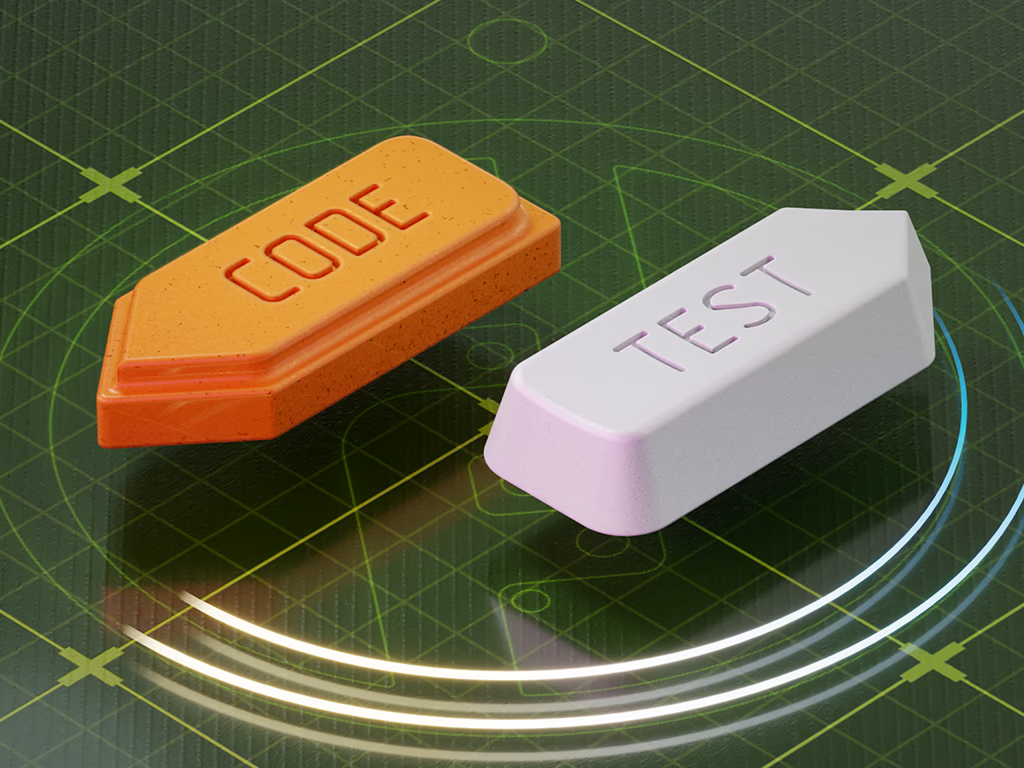
Verifies it, independently
It holds the application: how it actually behaves when the code runs. Every change is tested against the running app, by a system that did not write it.
An independent agent with no loyalty to your code.
Only to the quality of your application.
The standard that decides what ships
Your customers experience whatever clears it. Your team sets the standard. Studio tests every change against your running app and holds it there.
Every change passes through it


The economics invert
The standard is yours

Give your release
a clear answer
A coding agent checking its own work is not verification. Studio tests every change against the running app, independently of the tool that wrote it. That separation is what makes the result something a release decision can stand on.
Bolting AI onto yesterday's tools changes the interface, not the economics. The suite still breaks when the app changes, and the upkeep still lands on your team. Studio is built on models trained on real enterprise testing data, and it sharpens on your application with every run. The foundation is different, so the economics are different.
Every run teaches the system more about how your application behaves. Coverage climbs, upkeep falls, and the accuracy of every verdict improves.
You do. Your team defines what good means, what must never break, and what evidence a release needs. Studio enforces that standard on every change. Nothing about the bar moves out of your hands.
Studio detects the change, updates the affected tests, and keeps the suite current. Your team reviews what matters instead of repairing what broke.