The Test That Actually Knows Your App
Learn how persistent application models help SDETs move beyond brittle scripts, reduce test maintenance, and understand failures faster.
Most tests are written for how the UI looks at a specific moment. You build them around the buttons, fields, and flows that exist during that run - but the app keeps changing after that. When something breaks later, the test doesn't explain the change, so your team ends up spending time figuring out what moved, what shifted, and why it failed.
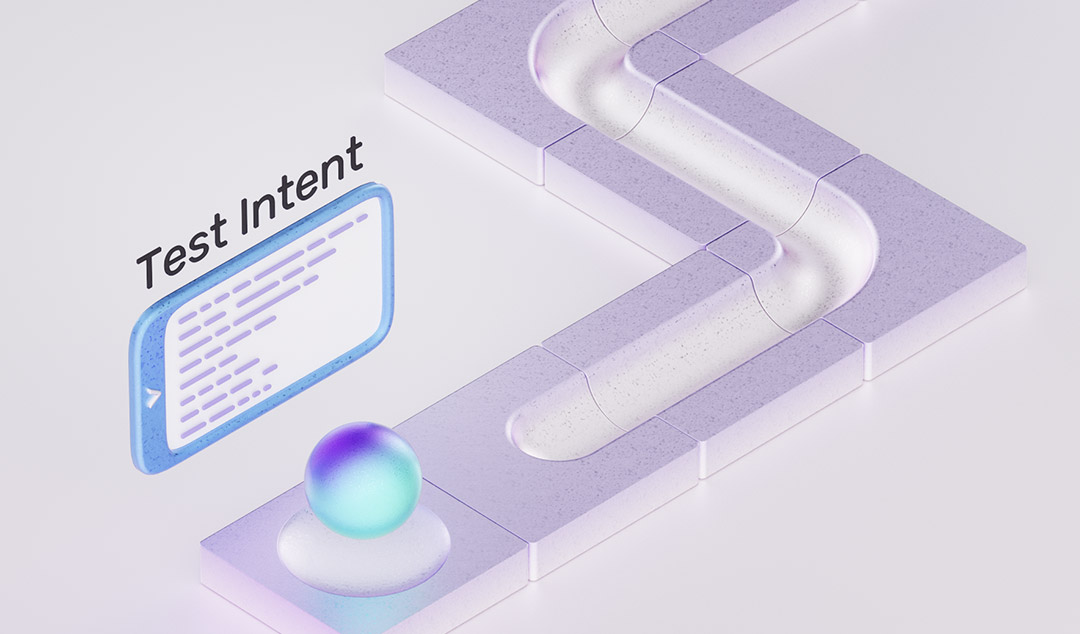
There's a better way to build tests. Instead of treating each run like a separate snapshot, the test builds context over time and learns how the application behaves. It helps teams understand the elements, flows, and changes within the app - giving them a clearer way to respond when something goes wrong.
Why Static Scripts Keep Letting You Down
The maintenance problem in test automation isn't just about tools or team skills. The deeper issue is how most tests are built from the start. Traditional scripts depend on fixed selectors, fixed flows, and outdated assumptions, so they break whenever the UI or API changes.
This creates a real burden on engineering teams. Even with the majority of organizations now experimenting with AI-augmented QE workflows, only 15% have actually scaled them (World Quality Report 2025–26). The gap isn't ambition - it's infrastructure.
Scripts Only Remember What You Told Them
When you write a Selenium or Playwright script, you capture how the application behaves during a single session. The locator, wait condition, and navigation path all reflect the app's appearance at that moment. Once the session ends, that context doesn't carry forward - so the next run starts from the same limited view again.
That's why teams fall into the same maintenance loop after every sprint. The UI changes, the test breaks, an engineer investigates, updates the locator, and gets things passing again. Since the test has no memory of the app's history, it can't tell a real regression from a routine UI update.
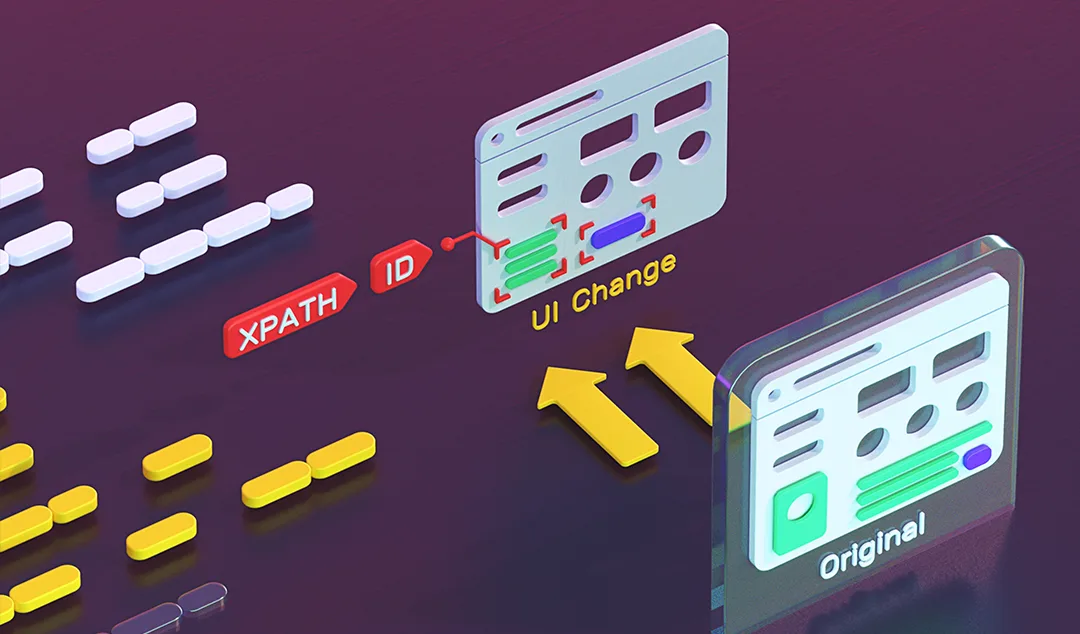
The Snapshot Model Breaks Under Speed
As teams ship faster, static test suites have less time to stay aligned with the application. A suite built for quarterly releases starts breaking constantly when the same app moves to weekly or daily deploys. The faster you move, the more a brittle test layer pulls you back.
43.5% of teams still take more than a week to move code from commit to production - and test-related friction is one of the leading contributors to that delay (DORA, 2025). For teams trying to close that gap, a test suite that breaks on every UI change is often the first thing that slows them down.
Failure Diagnosis Becomes Archaeology
When a static test fails, your team has to rebuild context from nothing. Which UI version does this failure belong to? Did that element change recently? Was this flow still working last week? Since the test has no history, engineers piece the story together from memory, changelogs, and whatever screenshots happened to get saved.
That turns failure analysis into guesswork instead of real engineering work. The World Quality Report 2025–26 found that AI tools in QE deliver only a 19% average productivity improvement, with 33% of adopters reporting very limited gains - because teams still lack the context and structure to act on what those tools surface (World Quality Report 2025–26). Without that foundation, even good tooling can't close the gap.
What It Means When a Test Actually Knows Your App
A test with a persistent application model behaves differently because it continuously learns from each run rather than storing a single fixed view. It tracks element changes, understands how flows move across sprints, and can compare the current state of the application against earlier versions.
Think of it as a continuously updated model built from element-level data captured across every test run - not a snapshot, but a living record of how your application behaves over time. Gartner's 2025 Magic Quadrant for AI-Augmented Software Testing Tools describes this category of tooling as essential for businesses aiming to achieve excellence in software quality, productivity, and market responsiveness - not just a faster way to run the same old tests (Gartner, 2025).
Context Builds With Every Run
With a persistent application model, every test run adds more signal about how the application works. It stores element positions, selector patterns, user flows, and timing - then compares them against earlier runs. Over time, it gets smarter because it learns from the application rather than weakening whenever something changes.
This is what lets a test distinguish between a normal change and a real failure. A button that moves during a redesign isn't the same as one that stops working - but static tests treat both as failures. McKinsey research found that if the underlying context AI tools rely on isn't accurate, outputs will be unreliable - a straightforward case of "garbage in, garbage out" (McKinsey, 2026). The same logic applies directly to test automation: without accumulated context, even intelligent tools are working in the dark.
Failures Come With a Diagnosis, Not Just a Red Light
When a test understands your application, a failure provides more than just a status signal. It shows you what changed, whether that selector was stable before, and whether the same issue has appeared in past runs. You can also see whether the flow broke once, kept failing, or followed a pattern your team had already fixed before.
That changes what the next step looks like. Instead of opening DevTools and rebuilding the whole story from scratch, you already have the failure placed inside the app's recent history. Less wasted investigation time, fewer dead-end interruptions, and more failures that arrive with enough context to act on quickly.
The Test Suite Becomes an Institutional Record
QA teams lose important knowledge when people leave or teams change. An engineer may remember which flows were stable, which areas broke often, and what changed during the last redesign - but static scripts don't keep any of that history. Once that person leaves, the team often rebuilds the same context from scratch.
A persistent model stores that knowledge inside the test suite so teams can draw on it later. When a new team member looks at a failing test, they can see how that part of the application behaved when it was last stable. Gartner's 2026 Magic Quadrant for Technical Debt Management Tools found that around 40% of the average IT department's spend gets consumed by maintaining technical debt - much of it driven by systems where context and history were never captured in the first place (Gartner, 2026). As test suites grow, institutional memory stops being a nice-to-have and becomes load-bearing.
What Changes for You, the SDET
Moving from static scripts to model-backed testing doesn't remove the SDET role - it changes what the role spends time on. Instead of fixing broken locators and rebuilding context after every failure, you can focus on analysis, test strategy, and smarter release decisions.

A failure that once took the better part of an hour to understand can arrive with the context already attached. Teams can also decide which tests to retire, expand, or prioritize based on the application's actual stability history rather than gut feeling. The World Quality Report 2025–26 shows that 63% of QE professionals now rank Gen AI as the most important skill to develop (World Quality Report 2025–26) - and that shift only pays off when the underlying test infrastructure can actually support it.
Functionize is built for this. It keeps a persistent model of your application across runs, so your team can track element changes, flow updates, and repeat failure patterns without starting from scratch every time something breaks.
Ready to see what a test that knows your application actually looks like in practice? Book a personalized demo or start a free trial.
Source: