Article
Self-Healing Test Automation: Smarter Testing for Modern Apps
STOP Fixing Broken Tests! Discover the AI secret saving teams 70%+ maintenance time. Functionize Self-Healing Automation adapts to UI changes instantly. Release faster.
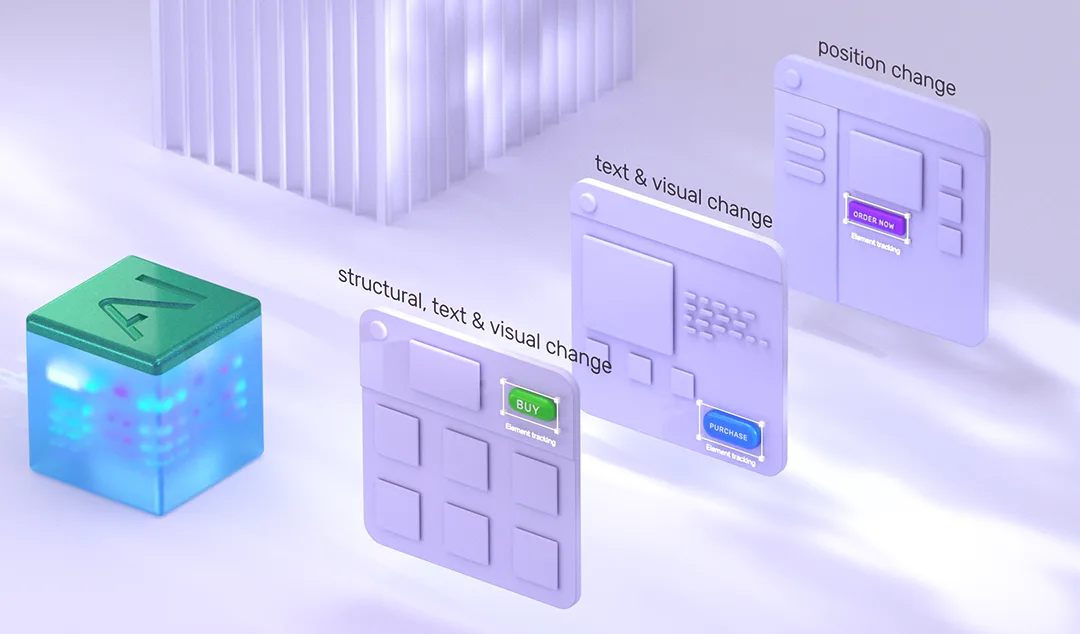
Modern applications change daily; interfaces shift, DOM structures evolve, and components render differently based on user behavior, experiments or personalization. This instability creates one of the biggest hidden costs in test automation: maintaining tests that fail simply because the application changed.
Traditional scripts break easily, a button is renamed, a div moves, or a component is restyled - and automation collapses. But worse, the action that fails is often not the real root cause. A subtle UI change several steps earlier may cause the wrong element to be clicked, leading the test onto an unexpected page. The final failure only appears later in the sequence, forcing teams to trace back through logs, attributes and screenshots to diagnose the issue. This manual root-cause investigation consumes hours and slows fast-moving teams.
Self-healing test automation addresses this problem, it uses AI-driven models to detect UI, DOM or behavior changes and adapt tests automatically. Instead of failing on the first broken locator, the system recalibrates its understanding of each element and maintains the flow without human intervention.
This matters more in 2025–26 than ever. The front-end ecosystem moves fast. Teams ship continuously with CI/CD. Microfrontends split experiences across independent services. Dynamic frameworks like React, Next.js, Svelte and Vue generate non-static DOMs. Personalization creates different UI states per user.
In this environment, automation without self-healing becomes brittle. Test suites break with every small UI update. Self-healing systems absorb these changes, reduce root-cause analysis time and protect engineering velocity.
Why Test Automation Needed a Self-Healing Upgrade
For years, automated tests relied on brittle scripts. Static locators and hard-coded paths could not cope with modern, dynamic interfaces. As UIs became more fluid, test suites broke more often, and maintenance soon consumed more time than writing features.
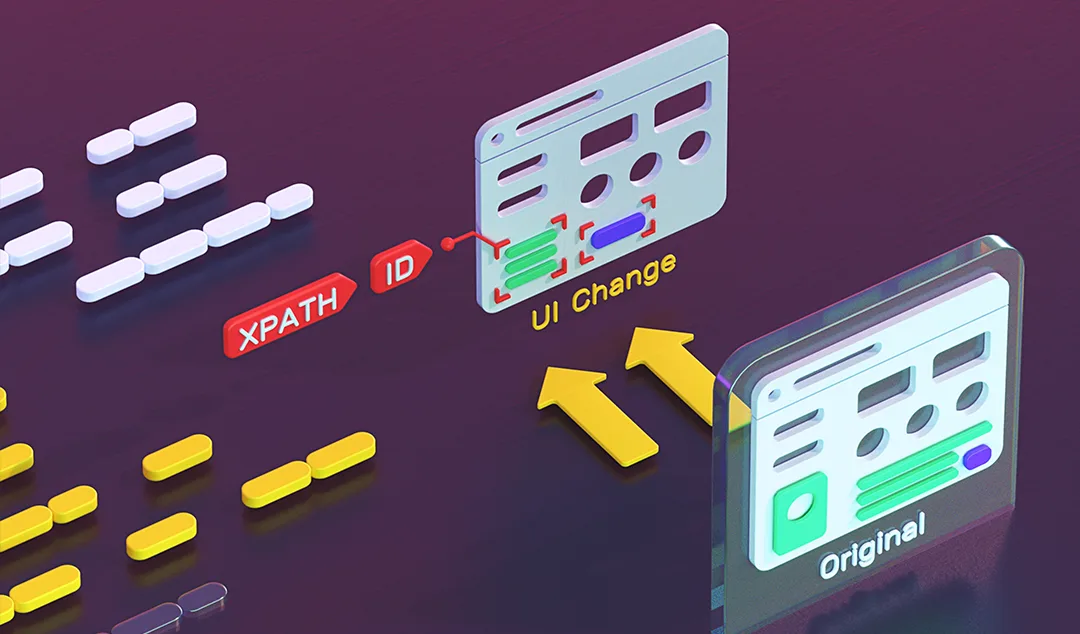
Brittle selectors and dynamic states. A fixed sequence, click X, type Y, fails when a button’s ID, label or placement changes. Modern frameworks introduce constant UI shifts that break traditional automation.
CI/CD accelerates breakages. With multiple deployments per day, each update can alter the DOM or change rendering conditions. Frequent releases leave little time for manual script fixes.
Maintenance costs drain time and resources. Enterprises can spend millions each year updating scripts. Up to 60–70% of QA effort may be spent fixing tests instead of increasing coverage. This slows releases and diverts engineering resources.
Impact on quality and morale. Delays, broken tests and constant firefighting erode trust in automation. Coverage gaps appear, bugs slip through and team morale drops.
These pressures pushed the industry toward self-healing solutions that reduce fragility, automate corrections and restore development velocity.
How Self‑Healing Automation Works Under the Hood
Self-healing automation combines artificial intelligence and pattern analysis to recognize UI changes and adjust tests autonomously. Four principles drive this mechanism:
- Why Traditional Locators Aren’t Enough: Classic locators (IDs, XPaths) break when simple UI tweaks occur. Relying on a single attribute leads to constant failures in fast-moving environments.
- Multiple-Signal Object Identification: Modern systems build a “fingerprint” for each element. They consider visual attributes, text content, labels, surrounding context, DOM structure and semantic information. This multi-attribute approach reduces false negatives.
- Healing Logic in Real Time: On failure, the system analyzes the updated UI, finds the best match, validates it and continues execution. This real-time adaptation keeps pipelines stable through minor changes.
- Data + Behavior Model Learning: Self-healing engines learn from past matches and evolving UI patterns. Machine-learning models refine predictions with each run, improving accuracy over time.
Where Self-Healing Automation Makes the Largest Impact
Self-healing stabilizes automation in high-change environments, including:
Dynamic front-end frameworks and microfrontends. React, Vue, Svelte and microfrontend architectures constantly alter markup, causing brittle tests. Self-healing stabilizes these flows.
Fast CI/CD cycles. Multiple deployments per day create countless opportunities for locator breakage. Self-healing keeps pipelines green.
Large enterprise test suites. At scale, healing replaces hours of manual locator updates and reduces flakiness.
Personalized and AI-driven interfaces. Recommendation engines and dynamic content rearrangements create UI states that differ per user. Self-healing adapts across variations.
E-commerce, banking and API workflows. Real-world teams report major reductions in script maintenance and false failures using adaptive healing.
Mobile and cross-platform apps. Healing corrects locator differences across iOS/Android and device types.
Regulated industries. Audit-friendly logs and consistent execution help meet compliance requirements.
Business-critical flows. Authentication, checkout and onboarding stay stable even when UI elements change.
Key Capabilities to Look for in Self-Healing Test Automation
Well‑designed self‑healing systems rely on core capabilities that make tests resilient and maintainable. Each capability helps reduce noise and stabilize automation. When evaluating platforms, focus on the following areas:
Multi‑Attribute Element Identification
Leading self‑healing engines don’t depend on a single selector. They collect a rich fingerprint of each element, including ID, label, visible text, class, position and surrounding context, so that when the UI changes, the engine still recognizes the component. By storing snapshots of DOM position and visible text in a repository, they build a multi‑attribute profile that improves match accuracy.
Learning‑Based Locator Recalibration
When tests succeed, the platform records the original locators, pages and inferred user intent. If a locator later fails, the engine uses this intent and stored data to search for a matching element and recalibrates the locator automatically. Machine‑learning algorithms help detect page changes and find new controls in real time to minimize false negatives.
Visual + DOM Hybrid Detection
Self-healing systems often combine DOM attributes with visual cues such as layout, text and relative positioning. This hybrid approach ensures that even when the underlying DOM shifts, the engine can rely on visual context + structural context to find the correct element. This results in stronger resilience on modern, dynamic front-end frameworks.

Behavior‑Aware Adaptive Execution
Some platforms go beyond element matching and understand the intended user action. By matching steps to the intended outcome, these systems prevent false positives and only heal when the user flow is still valid. This makes the healing process context-aware rather than purely attribute-based.
Smart Waits and Timing Prediction
Self-healing frameworks manage timing intelligently. Instead of relying on fixed waits, they monitor page state, asynchronous activity and rendering patterns to determine when elements are ready. This dynamic wait strategy reduces flakiness and aligns with real-world user behavior.
Recovery Logic for Unexpected States
When a test encounters a NoSuchElement error or another unexpected state, recovery logic replaces the failed control with a new value that best matches and proceeds with the action. This capability ensures tests continue running through pop‑ups, modals or redirects instead of stopping at the first error.
Auto‑Updating Test Models Without Manual Intervention
Self‑healing isn’t just about runtime fixes; some platforms update code or models automatically. Plugin can update broken locators in the code base with new values in a single click. By continually updating test models based on healing decisions, these tools reduce manual refactoring.
Reporting + Transparency on Healing Decisions
Transparency is critical for trust in AI‑based automation. Detailed logs show which locator failed, what attributes the system used to heal it and the new identifier that replaced the old one. Leading platforms provide clear, visual reporting, including updated control values and screenshots, so QA teams understand exactly how healing occurred and why.
Challenges and Misconceptions About Self-Healing Tests
Self-healing offers major benefits, but there are common misunderstandings:
- It doesn’t replace proper test design; missing assertions still fail.
- It is not an auto-pass system; major UI changes trigger valid failures.
- It requires initial setup to learn baselines.
- QA oversight is still needed to approve or reject healing decisions.
- Complete UI redesigns still require manual test updates.

How Self-Healing Fits Into the Modern Testing Lifecycle
Self-healing integrates across every phase of testing:
- During creation: Engines capture locators and user intent for future healing.
- During execution: Healing triggers automatically during CI/CD runs, reducing breakage noise.
- During maintenance: Logs show each healing action; teams review and accept or refine updates.
- Continuous feedback: Developers see immediate feedback when changes affect flows.
By spanning creation, execution and maintenance, teams maintain a steady testing rhythm despite constant releases.
Future of Self-Healing Automation
As artificial intelligence advances, self‑healing will move from a useful add‑on to a core requirement in test automation. AI‑powered frameworks already leverage object recognition, machine learning and natural language processing to identify UI changes, predict new element locators and even understand semantic changes like altered button labels. These capabilities will only grow more sophisticated. Future self‑healing engines will continuously monitor tests, diagnose failures, and automatically suggest or implement fixes, turning automated suites into adaptive systems that learn from every run.
The next generation of self‑healing will also integrate more deeply with DevOps and agentic testing platforms. AI‑driven healing is becoming a key part of automated testing, enabling faster cycles and future‑proof tests that adapt as applications evolve. Tools will blend visual AI, NLP and behavior modeling to choose the best locator or interaction based on user intent, reducing flakiness and maintenance. Self‑healing will extend beyond UI locators to API endpoints, data models and even test logic, creating truly resilient end‑to‑end automation.
This evolution changes how QA teams work. Self‑healing is not just a feature but a shift in how teams maintain stability; when automation heals itself accurately, it eliminates flakiness and noise in CI/CD pipelines, allowing releases to move faster and giving teams a competitive edge. In the coming years, expect AI‑native platforms to push deeper into this territory, offering intelligent, transparent healing that learns from each execution and drives the industry toward autonomous testing.
How Functionize Strengthens Self-Healing Automation
Functionize extends self-healing far beyond basic locator repair through deep learning, dynamic intelligence and agentic AI.
Dynamic learning and deep intelligence.
Functionize captures millions of data points per test run. Deep learning models uniquely identify each element and continuously refine their understanding as the UI evolves. The system analyzes hundreds of attributes and scores changes for transparent healing decisions.
Self-healing tests with root-cause detection.
The platform learns UI behaviors so style, placement or label changes don’t break tests. Root-cause analysis pinpoints the source of issues and Smart Fix suggests optimal updates. Quick Select enables live element updates mid-execution.
Advanced machine learning engine.
Trained on a decade of real-world testing data, Functionize’s engine achieves near-perfect element recognition and makes sub-second healing decisions. Computer vision and ML combine to understand test intent and validate workflows. Generative AI agents assist with creating and maintaining tests.

Agentic AI and enterprise scale.
Functionize eliminates brittle tests with 99.97% element accuracy and 80% reductions in flakiness. Non-technical users can build tests rapidly. Containerized execution scales across thousands of parallel runs.
Engineer-friendly outcomes.
Engineers widen coverage instead of fixing locators. Functionize’s cloud executes across environments with 99.9% self-healing accuracy. Enterprises report up to 85% maintenance reduction and dramatic regression cycle improvements.
Functionize transforms self-healing into a comprehensive AI-driven system that stabilizes tests, scales across teams and accelerates innovation.
Conclusion
- Self-healing reduces brittleness and minimizes locator maintenance.
- It stabilizes pipelines during frequent deployments.
- AI-driven matching and behavior awareness ensure accurate healing.
- Oversight is still essential for major UI or logic changes.
- Healing integrates naturally into creation, execution and maintenance.
- AI will continue expanding automation toward adaptive, autonomous systems.
- Functionize leads with deep learning, high accuracy and enterprise-scale execution.